Change Language :
POM and iglidur in comparison
Which material is the better choice for wear-resistant components?
POM is a proven standard plastic for technical components. However, when components are subject to continuous movement, need to operate without lubrication, or must be manufactured cost-effectively by 3D printing, the material reaches its limits.
The iglidur high-performance polymers from igus were developed specifically for these requirements. They are wear-resistant, self-lubricating, and designed specifically for moving applications. At the same time, they enable the cost-effective production of complex components in additive manufacturing.
Whether POM is sufficient or iglidur is the better choice depends on the requirements of your application. This comparison shows the most important differences.
Can POM be 3D printed?
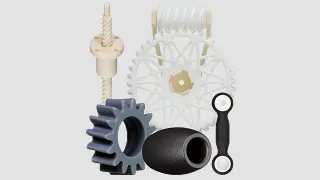
POM can in principle be processed additively, but in practice it makes high demands on the printing process. Due to its very good sliding properties, POM adheres poorly to the print bed and has a strong tendency to warp. Inadequate layer adhesion can also lead to delamination and reduced component strength. Increased safety precautions are also necessary during processing, as POM can release formaldehyde at critical temperatures.
For these reasons, igus does not include POM filaments in its product range. Instead, specially developed iglidur materials offer a process-reliable alternative for wear-resistant, lubrication-free functional components.
iglidur materials for additive manufacturing:
- Filament: For FDM printers
- SLS powder: For selective laser sintering
- Resin: For DLP and LCD printers
What is iglidur?
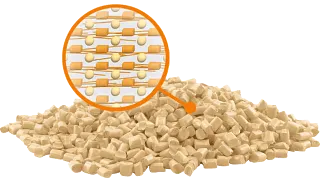
iglidur is the name of the igus material family for wear-resistant and moving applications. The materials combine high load capacity with permanently lubrication-free operation.
Each iglidur material is based on three coordinated components:
- Base polymer: Selected to suit the specific application.
- Solid lubricants: Distributed throughout the material for permanently minimal friction.
- Reinforcing agents & fibres: Specifically increase stability and load-bearing capacity.
The result: components made of iglidur run without external lubrication. This reduces maintenance, minimises dirt adhesion, and prevents unplanned downtime.
For additive manufacturing, these tribologically optimised materials are available as filament, powder, and resin. Compared to conventional 3D printing materials, they achieve up to 50 times greater wear resistance depending on the application.
Specific properties such as temperature resistance, food compliance, or ESD protection also enable precise use in a wide variety of industries.
POM or iglidur? The specifications in comparison
POM is characterised by high stiffness, dimensional stability, and good machinability. However, the material often requires additional lubrication for moving components in order to permanently minimise wear.
iglidur materials were developed especially for friction and wear applications. Thanks to integrated solid lubricants, they function permanently even in dry operation and enable low-maintenance designs.
| Material properties | POM (polyoxymethylene) | iglidur 3D printing materials |
|---|---|---|
| Mechanical strength & stiffness | ✔ | ✔ |
| Wear behaviour | Low wear when used with lubrication | Low wear even in dry operation |
| Friction behaviour | Good sliding properties, especially in combination with lubricants | Low coefficient of friction, ideal for moving and sliding parts in dry operation |
| Maintenance-free | ✘ Maintenance required for applications with lubrication | ✔ Maintenance-free due to self-lubricating specifications |
| Processability | ✔ CNC machining | +/– 3D printing | ✔ CNC machining | ✔ 3D printing |
Sound analyses and test results for POM and iglidur
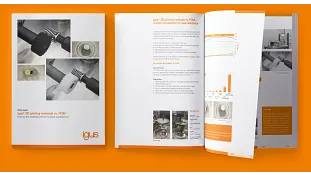
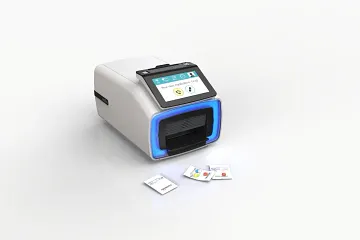
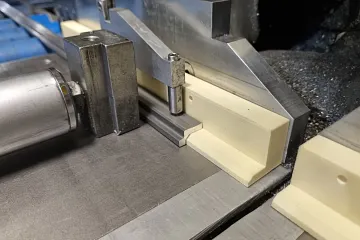
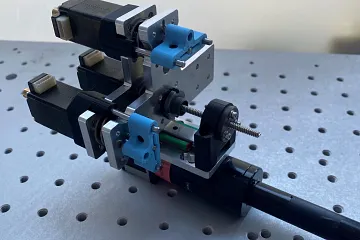
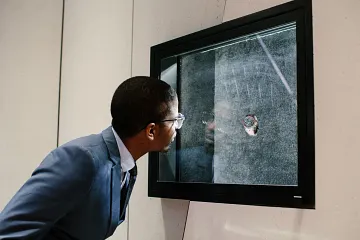
Detailed data on wear behaviour in direct comparison: test results from the igus laboratory and practical application examples provide you with valuable decision-making aids for choosing between POM and iglidur tribofilament.

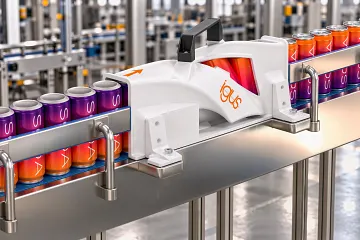







iglidur plastic bar stock: Over 40 materials for moving applications
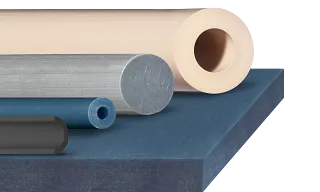
In addition to additive manufacturing, igus also offers raw materials for conventional, subtractive machining on CNC machines. More than 40 proven iglidur high-performance polymers are available directly from stock for the machining of prototypes and small and medium-sized batches. Each material becomes a specialist for a specific area of application due to its specific property - from high temperature to seawater and food contact to automotive.
Why iglidur bar stock?
- Large variety of materials: Wide portfolio of plates, plate strips, sheet, as well as round and hollow rods.
- Economical production: Ideal for prototypes and small to medium batches using machining processes.
- Targeted use: Tailor-made specifications for a wide variety of industry requirements.
- High availability: Comprehensive bearing product range for short procurement times.
Frequently asked questions about POM
POM, chemically known as polyoxymethylene, is a semi-crystalline thermoplastic from the acetal resin family, characterised by high stiffness, good dimensional stability and low moisture absorption. There are two variants on the market: POM-C (copolymer) is more chemically resistant and impact-resistant; POM-H (homopolymer) is stiffer and stronger.
POM is not generally food-safe. There are specially approved POM types for food contact, the suitability of which depends on the formulation, colour and approval. If you are looking for an igus material for food contact, you can find the approved materials in the FDA and EU compliant products overview.
Depending on the version, POM can be used permanently up to about 90-100°C, with POM-C having a slightly higher temperature resistance than POM-H. The material can withstand up to 140°C short-term, and the low-temperature range extends down to -50°C.
Yes, a 1:1 replacement is usually possible without any problems. iglidur plain bearings and components correspond to standard dimensions. Switching to iglidur enables immediate, lubrication-free dry operation with longer service life without the need for design adjustments to your application.
iglidur plain bearings: Maintenance-free standard components

In addition to individual production, standard components ready for immediate use are also available with iglidur plain bearings. They prevent direct contact between, for example, the shaft and the housing, thus preventing wear of both components.
Unlike conventional metal or POM bearings, iglidur linear plain bearings do not require external lubricants. Thanks to the integrated solid lubricants, they are 100% maintenance-free and offer an economical alternative to standard bearings that need to be lubricated.
Available in our plain bearing online shop in over 10,000 dimensions and various types, the specially developed iglidur materials cover a wide range of requirement profiles for a multitude of industries.
Proven durability in the plain bearing test
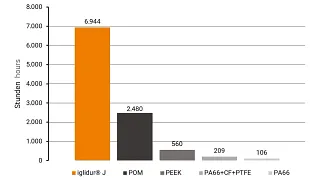
In dynamic use, iglidur plain bearings are impressive due to significantly lower wear. Systematic tests in our own test laboratory prove that under identical operating conditions, a plain bearing made of iglidur J achieves a service life many times longer than a comparable bearing made of plastic such as POM. This downtime is made possible by the tribological coordination of the base polymer, integrated solid lubricants, and reinforcing materials.
Test parameters of the bearing test:
- Movement: Rotation
- Speed (v) = 0.3m/s
- Load (p) = 1N/mm²
- Shaft material: 304 stainless steel

igus 3D printing materials as a sustainable alternative to POM
POM remains a proven standard material for stiff and dimensionally stable precision parts. igus can also provide machining for components made of classic low-cost materials upon request. However, if the application involves moving components, lubrication-free dry operation, minimal wear rates, or economical production using 3D printing, iglidur materials offer decisive advantages. Thanks to integrated solid lubricants, the components operate permanently without external lubrication. At the same time, design engineers benefit from maximum design freedom, short development times, and economical production with no minimum order quantity.
With tribologically optimised filaments, SLS powders, resins, and bar stock, igus offers a continuous material platform for modern, moving applications. If you want to reduce wear, avoid maintenance, and utilise the full potential of additive manufacturing, iglidur is the higher-performance alternative to POM.
The most important advantages at a glance:
Processing efficiency
Cost savings
Long service life
Sustainability
Maintenance-free
Innovation potential
Consulting
I look forward to answering your questions

Vincent Palan+91 63648 49608Write e-mail
Shipping and consultation
In person:
Monday to Friday from 7 am - 17 pm.
Online:
24h
WhatsApp-Service:
Monday - Friday: 9am - 5:30pm